
The intervention in sewage and contaminated water damage is no longer a matter of “simple cleanup,” it has evolved into a form of environmental health management led by experienced, highly trained teams. The reality is, traditional methods, the typical “mop and bleach” response, fall short of addressing the microscopic and structural behavior of modern building materials.
An approach that fails to account for porous material behavior and the type of contaminant is bound to fail. As such, experts in modern containment, removal, and cleanup strategies rely on a deeper understanding of material response and environmental control to achieve safe, long-term restoration outcomes.
1. Assessing the Risk Before Any Cleanup Begins
When water enters spaces and begins to disrupt the normal use of your property, whether from a backup or an intrusion, the first move isn’t action; it’s interpretation. Seasoned professionals don’t rush in swinging equipment; they make rapid, informed assessments of risk layers others might overlook, before taking the first step in the right direction.
Experts follow a primary stabilization protocol to ensure a localized plumbing or sewage failure does not evolve into a building-wide health or safety crisis.
- Source identification matters more than volume: A shallow backup can be more dangerous than deep standing water, depending on origin.
- Cross-contamination pathways: Airflow patterns, foot traffic, and even wiring conduits can spread unseen hazards.
- Immediate containment strategy: Sealing off affected zones using negative air pressure isn’t optional; it’s foundational.
For businesses, especially, this stage defines liability. An improperly contained environment doesn’t just damage property; it can interrupt operations and compromise occupant safety. This is where water damage restoration Boise experts professionally stop escalation by establishing immediate containment protocols.
Read More: Home Energy Audit Guide for Massachusetts, Ohio, &Maine Homeowners
2. Deciding What Must Be Removed vs. What Can Be Saved
Once contamination is confirmed, every surface becomes a decision point. And this is where non-experts often get it wrong: trying to “save” what should be removed.
- Non-negotiable removals: Carpets, insulation, padding, and upholstered items aren’t cleaned; they’re eliminated.
- Strategic cuts (“the chop”): Drywall isn’t removed randomly. It’s cut above contamination lines to account for invisible absorption and capillary action.
- Selective salvage: Hard, non-porous materials can be restored—but only after aggressive, controlled decontamination.
Standard cleaning often leaves the “roots” of the problem. These actions ensure that no organic matter remains to support a secondary damage cycle.
3. Controlling Air Quality Before Drying the Space
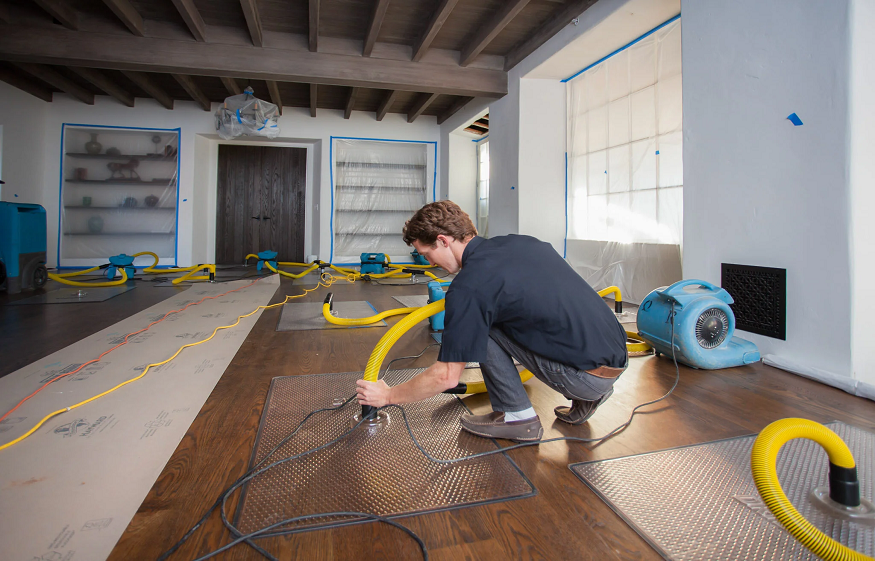
Most people assume drying is about removing visible moisture. In reality, it’s about controlling what you can’t see. If you attempt to dry a space before controlling the air, you aren’t just evaporating water; you are aerosolizing pathogens. That’s where experts focus on critical invisible factors before they ever flip the switch on a drying fan:
- Ensuring no early air movement: Turning on fans too soon can aerosolize contaminants, spreading them far beyond the original site.
- Air scrubbing comes first: HEPA filtration systems are deployed to clean the environment before any drying begins.
- Precision dehumidification: Industrial-grade systems pull moisture from deep within structures, not just surfaces.
This stage is where modern solutions separate themselves. It’s not brute force; it’s controlled environmental engineering. For commercial spaces, especially, maintaining indoor air quality during this process is critical to minimizing downtime.
Read More: Residential & Commercial Pest Control Services in Ohio
4. Confirming the Space Is Truly Safe to Use Again
Completion isn’t when things “look clean.” It’s when they can be proven safe.
- ATP testing: Instant indicators reveal whether organic contamination still exists.
- Moisture mapping: Hidden pockets behind walls or beneath flooring are identified and addressed.
- Third-party validation: Independent sampling ensures the environment has returned to a stable, safe baseline.
For decision-makers, this is about documentation as much as safety. Proper verification protects against future disputes, insurance complications, and regulatory concerns. It’s the difference between claiming a job is done and demonstrating it.
In essence, if you’re responsible for a property, whether it’s a home, a portfolio asset, or a commercial space, sewage and contaminated water damage demand more than a response. It requires professional discernment. The right team doesn’t just clean; they interpret, contain, and restore with foresight. And in environments where unseen risks define outcomes, that level of professionalism isn’t a luxury; it’s the baseline for doing things properly.