
The global events industry is currently undergoing a quiet but profound transformation. For decades, the gold standard of a trade show presence was defined by weight and permanence: heavy timber, high-gloss acrylics, and structural aluminum. The more a brand spent on “heavy lifting,” the more successful they were perceived to be. However, as we move further into an era defined by logistical agility, environmental accountability, and the “experience economy,” the old metrics of success are crumbling.
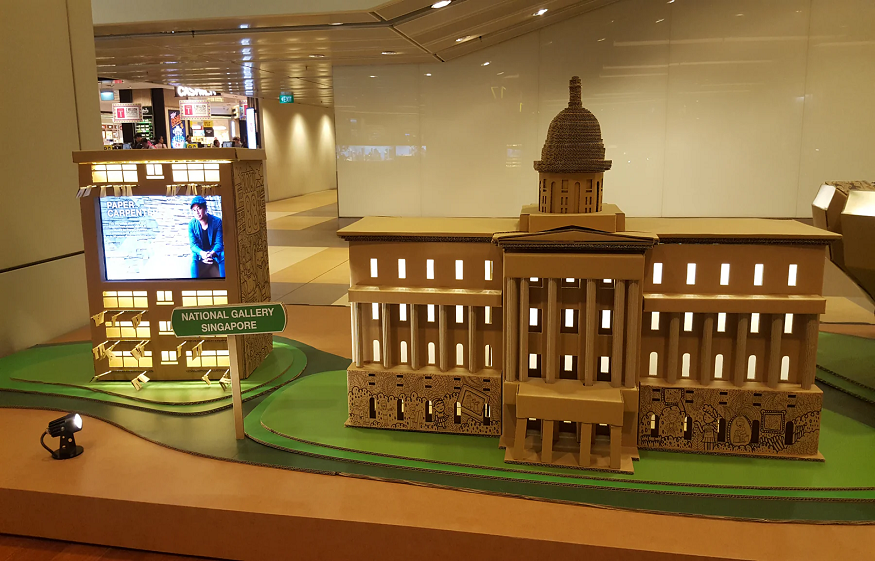
Today, the most sophisticated brands are looking for a different kind of luxury—one that prioritizes intelligence over mass. This shift has birthed a new discipline: “Cardboard Carpentry.” By utilizing high-compression corrugated fiberboard and innovative engineering, companies are discovering that they can achieve world-class aesthetics without the literal and metaphorical weight of traditional construction.
The Logistics of Agility: Beyond the Heavy Crate
In the world of professional exhibitions, “drayage” is often the most frustrating line item on a budget. For the uninitiated, drayage is the fee charged by event contractors to move your materials from the loading dock to your assigned space. These fees are calculated by weight.
When you opt for a traditional exhibit stand built from MDF or plywood, you aren’t just paying for the material; you are paying a premium to move it, store it, and eventually, dispose of it.
The Lightweight Revolution
High-performance paper materials, such as the Gaia Board or honeycomb cores, offer a staggering strength-to-weight ratio. A structural wall made of compressed fiberboard can support significant weight—often hundreds of kilograms—while weighing approximately 80% less than its wooden counterpart.
This weight reduction ripples through your entire event strategy:
- Shipping Costs: Move from expensive freight forwarders and 20-foot containers to standard courier services or even the back of a van.
- Labor Efficiency: A heavy booth requires a specialized rigging crew. A lightweight system can often be handled by your own marketing team.
- Carbon Footprint: Reducing weight directly correlates to reduced fuel consumption during transport, making your brand’s sustainability claims verifiable rather than performative.
Engineering the Perfect “First Impression”
Psychologically, visitors at a trade show are in a state of high-arousal and low-attention. They are bombarded by thousands of stimuli per minute. In this environment, “visual fatigue” is a real barrier to engagement.
Read More: Common Lounges Buying Mistakes: Sizing, Seat Dept
Traditional booths often feel cold and clinical—all glass and metal. There is a growing trend toward “Biophilic Design” in temporary spaces. Using natural, earthy textures like kraft paper creates an immediate sense of warmth and approachability. It signals that a brand is grounded, transparent, and forward-thinking.
Sculptural Versatility
One of the most exciting aspects of working with paper-based systems is the ability to create shapes that are prohibitively expensive in other materials. Because the material is easily cut using precision CNC technology, designers can experiment with:
- Parametric Curves: Creating flowing, organic walls that guide foot traffic naturally into the center of the space.
- Intricate Die-Cutting: Using the booth walls themselves as a canvas for “lace-like” patterns that interact with light and shadow.
- 3D Typography: Moving away from flat vinyl stickers to structural, three-dimensional letters that are integrated into the booth set up
The “Zero-Tool” Philosophy: Redefining Assembly
The most stressful hours of any marketing manager’s year are the 24 hours before a show opens. The “move-in” period is a chaotic ballet of forklifts, power tools, and short tempers.
The evolution of the popup booth has moved far beyond the flimsy “pull-up banner” of the 1990s. We are now in the age of structural modularity. Modern systems utilize interlocking notches—similar to a sophisticated 3D puzzle—that allow for a completely tool-free assembly.
Why “Tool-Free” Matters:
- Safety: Eliminating saws, drills, and heavy ladders on-site significantly reduces the risk of workplace accidents.
- Acoustics: A paper-based booth is assembled quietly. In a hall where dozens of booths are being hammered together, a “silent build” is a luxury for your nerves and your neighbors.
- Speed: When components snap together intuitively, a 20-square-meter footprint can be fully realized in a fraction of the time. This leaves more time for staff training and fine-tuning the guest experience.
Sustainability: The Circular Economy in Action
For too long, the events industry operated on a “build-and-burn” model. Custom timber booths were often smashed with sledgehammers on the final night because storage costs exceeded the value of the materials.
As corporate social responsibility (CSR) becomes a board-level priority, this waste is no longer acceptable. However, “sustainability” in events has often been synonymous with “boring” or “flimsy.” High-performance paper carpentry changes that narrative.
The Lifecycle of a Paper Booth
- Sourcing: High-quality booths are made from FSC-certified paper, ensuring that the raw materials come from responsibly managed forests.
- Longevity: Contrary to popular belief, these booths are not “single-use.” When engineered correctly, they can be flat-packed and reused for dozens of shows over several years.
- The End of Life: When a panel finally becomes too worn for display, it doesn’t go to a landfill. It goes into a standard paper recycling bin. It is processed, turned back into pulp, and eventually becomes a new box, a new book, or even a new booth.
This is the definition of a closed-loop system. When your brand tells a story about sustainability, the very walls you are standing within provide the proof.
Tactical Versatility: The “Chameleon” Booth
The marketing needs of a company change throughout the year. In March, you might need a massive presence at a global industry summit. In June, you might need three small “pop-up” displays for regional shopping center activations.
A modular paper system allows for this “chameleon-like” adaptability. Because the components are standardized (such as the Paper Carpenter “Gaia” system), they can be reconfigured endlessly.
- Scale Up: Connect multiple modules to create a “mega-booth” with private meeting rooms and storage areas.
- Scale Down: Take a single segment of that same booth and use it as a standalone kiosk for a local networking event.
- Update: Instead of replacing the entire structure, you can simply replace individual printed panels to reflect new product launches or seasonal branding.
Overcoming the “Cardboard” Stigma
The biggest hurdle for many brands is the mental leap from “cardboard” to “carpentry.” We are conditioned to think of cardboard as a shipping box—something brown, soft, and disposable.
However, a structural paper-board is a different beast entirely. It is engineered with vertical fluting and high-density liners that provide immense compressive strength. When treated with fire-retardant coatings, it meets the strictest international safety standards for exhibition halls (such as the B1 or M1 fire ratings).
From an aesthetic standpoint, the “raw” look is currently very “in,” particularly for tech, lifestyle, and wellness brands. However, for those who want a more traditional “premium” finish, these boards can be fully laminated with high-resolution digital prints, wood-grain textures, or even metallic foils. To the casual observer, the booth looks like a high-end permanent installation; only the brand manager knows it weighs less than a suitcase.
Case Study: The Pop-Up Success Story
Consider the rise of “retail-tainment.” Brands are no longer waiting for the annual trade show; they are creating their own moments in high-traffic urban areas.
A popup booth made of structural paper is the perfect tool for this. Imagine a skincare brand launching a new serum. They can deploy five identical, beautifully branded kiosks across five different cities in a single weekend. Each kiosk can be set up by a single brand ambassador in 20 minutes. At the end of the weekend, the “stores” disappear without a trace, leaving no environmental damage and requiring no heavy machinery.
This level of market penetration was previously impossible for smaller brands. Today, it is the standard for anyone who wants to stay relevant.
Designing for the Human Experience
The final, and perhaps most important, advantage of this new approach to design is the “tactile” nature of the materials. We live in a world of smooth, cold surfaces: glass phones, plastic dashboards, metal elevators.
Read More:
When a visitor walks into a booth designed with paper, they almost always do the same thing: they touch the walls.
There is a primal, sensory curiosity about seeing something so familiar (paper) used in such an unfamiliar, grand way. This “touch moment” is a psychological “hook.” It breaks the ice, invites conversation, and makes your brand feel human.
Read More: Mistakes to Avoid When Buying Furniture Online
In a digital-first world, the physical space is the only place where you can truly “feel” a brand. By choosing materials that are warm, innovative, and sustainable, you ensure that the feeling your customers take home is one of genuine connection.
The Future is Flat-Packed
The transition toward paper-based exhibition design is not a passing fad; it is a response to a world that demands more with less. We are moving toward a future where “permanent” is a liability and “flexible” is a superpower.
Whether you are a startup looking for your first booth set up or a multinational corporation seeking to overhaul your global event strategy, the answer lies in the intersection of creativity and sustainability. It’s time to stop building monuments to the past and start building bridges to the future—one recyclable panel at a time.
The only question left is: What will you create when you aren’t weighed down?