

Trees are often the crowning glory of a home’s landscape, providing shade, increasing property value, and adding aesthetic beauty to our neighborhoods. However, beneath the lush canopy and sturdy trunks lies a complex and powerful system of roots that is constantly searching for moisture and nutrients. When a tree is planted too close to a house, this search for sustenance can lead the roots directly toward the home’s foundation. While trees and buildings can often coexist peacefully for decades, there are specific circumstances where the root system becomes a structural liability. Understanding the mechanics of root-related damage and knowing when to prioritize removal is essential for every homeowner who wants to protect their most significant investment.
How Roots Interact With Your Home’s Foundation
Contrary to popular belief, tree roots rarely act like battering rams that physically punch holes through solid concrete. Concrete is incredibly dense, and most roots are not strong enough to pierce a healthy, intact foundation wall. Instead, the damage caused by tree roots is usually indirect and related to the soil conditions surrounding the house. Tree roots are highly efficient at absorbing large quantities of water. During periods of drought, a large tree can drink hundreds of gallons of water a day, causing the soil underneath and around the foundation to shrink and contract.
When the soil dries out and shrinks, it creates a void between the ground and the foundation. This lack of support can cause the foundation to settle unevenly, leading to structural cracks in the walls and floors. Conversely, in older homes or foundations that already have small, pre-existing fissures, roots can find their way into those tiny openings. As the root grows in diameter, it exerts gradual but persistent pressure, widening the crack and allowing water to seep into the basement or crawlspace. In these cases, the root is not the initial cause of the break, but it acts as an accelerant that turns a minor maintenance issue into a major structural failure.
Recognizing the Warning Signs of Foundation Stress
Detecting foundation issues early can save a homeowner thousands of dollars in repair costs. If you have large trees near your home, it is important to perform regular inspections of your interior and exterior walls. One of the most common signs of a settling foundation caused by soil desiccation is the appearance of stair-step cracks in brickwork or diagonal cracks radiating from the corners of windows and doors. You might also notice that doors and windows have suddenly become difficult to open or close, or that there are new gaps between the trim and the ceiling.
If the soil immediately adjacent to your foundation is pulling away from the concrete, it is a sign that the local moisture levels are being depleted, possibly by a nearby tree. While these symptoms can be caused by other factors, such as poor drainage or expansive clay, the proximity of a large, thirsty tree is often the primary culprit. A professional foundation inspection or a consultation with an arborist can help confirm whether a tree is indeed the source of the structural instability.
When Removal Becomes Necessary for Structural Safety
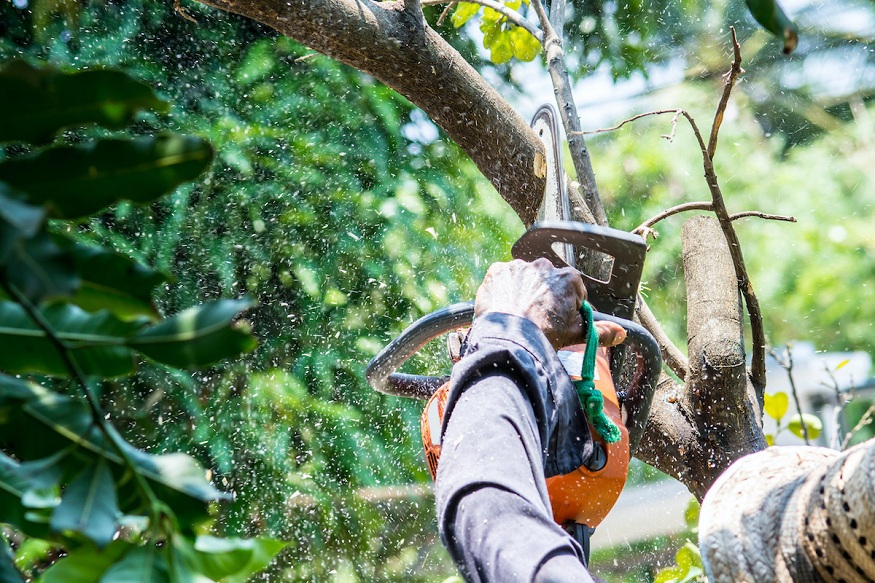
There are scenarios where the risks of keeping a tree far outweigh the benefits. If a tree is a species known for having an aggressive, invasive root system and it is already causing significant structural movement, tree removal service is often the only way to stabilize the property. When a foundation has suffered major cracking or bowing, the first step in the repair process is usually to remove the biological cause of the problem. Without removing the tree, any repairs made to the foundation will likely be temporary, as the roots will continue to grow and the soil will continue to shift.
Removal is also necessary if the tree has become a “hazard tree” due to root pruning or soil erosion. If the very roots that were intended to be pruned are the ones providing the tree’s primary stability, the tree may become a falling hazard to the home. In these instances, the threat of a massive trunk crashing through the roof is more immediate than the gradual sinking of the foundation. Furthermore, if the tree is an older specimen that is already in decline, investing in expensive root barriers or foundation piers may not be as cost-effective as removing the tree and starting over with a more foundation-friendly species located at a safer distance.
Conclusion
The relationship between your landscape and your home’s structural integrity is a delicate balance. While we all want to preserve the greenery that makes our properties feel like home, we must also be vigilant about the powerful forces at work beneath the soil. Tree roots are not inherently “evil,” but they are persistent, and their need for water can inadvertently compromise the stability of our houses. By identifying the signs of foundation stress early and understanding the different intervention levels, you can make an informed decision that preserves the safety and value of your home. Whether it involves installing a root barrier or making the difficult choice to remove a beloved tree, taking action is the only way to ensure that your home remains on solid ground for generations to come.